Project Overview
Over the course of a 4 week period and then a 15 week period I developed a first person puzzle experience as a solo developer. The original goal was to create a game where the player had to pick up a certain amount of collectables. I chose to take it in the direction of a puzzle.
During the 15 week period I remade the project to try to create multiple puzzle levels using the same mechanics. At about the 9th week I pivoted the project to go in a more mechanically interesting route.
The game is something I like to call an immersive-puzzle that involves lights and logic, and the final product become even more complicated adding sliding puzzle elements into the game. The goal is to either turn on or turn off all the lights to be allowed to leave through the exit.

First Development Period
The given goal for the project was to make a game with collectables in it, but I also wanted to make a puzzle game, so I thought about what kind of puzzle I could make in 4 weeks that would have an environment that would make sense to put multiple collectables in. My first thought was some kind of maze of rooms, but I quickly settled on doing a first person light puzzle. The idea of a puzzle that the player is inside of rather than looking at from the outside makes even a simple puzzle that much harder.
Responding To Feedback
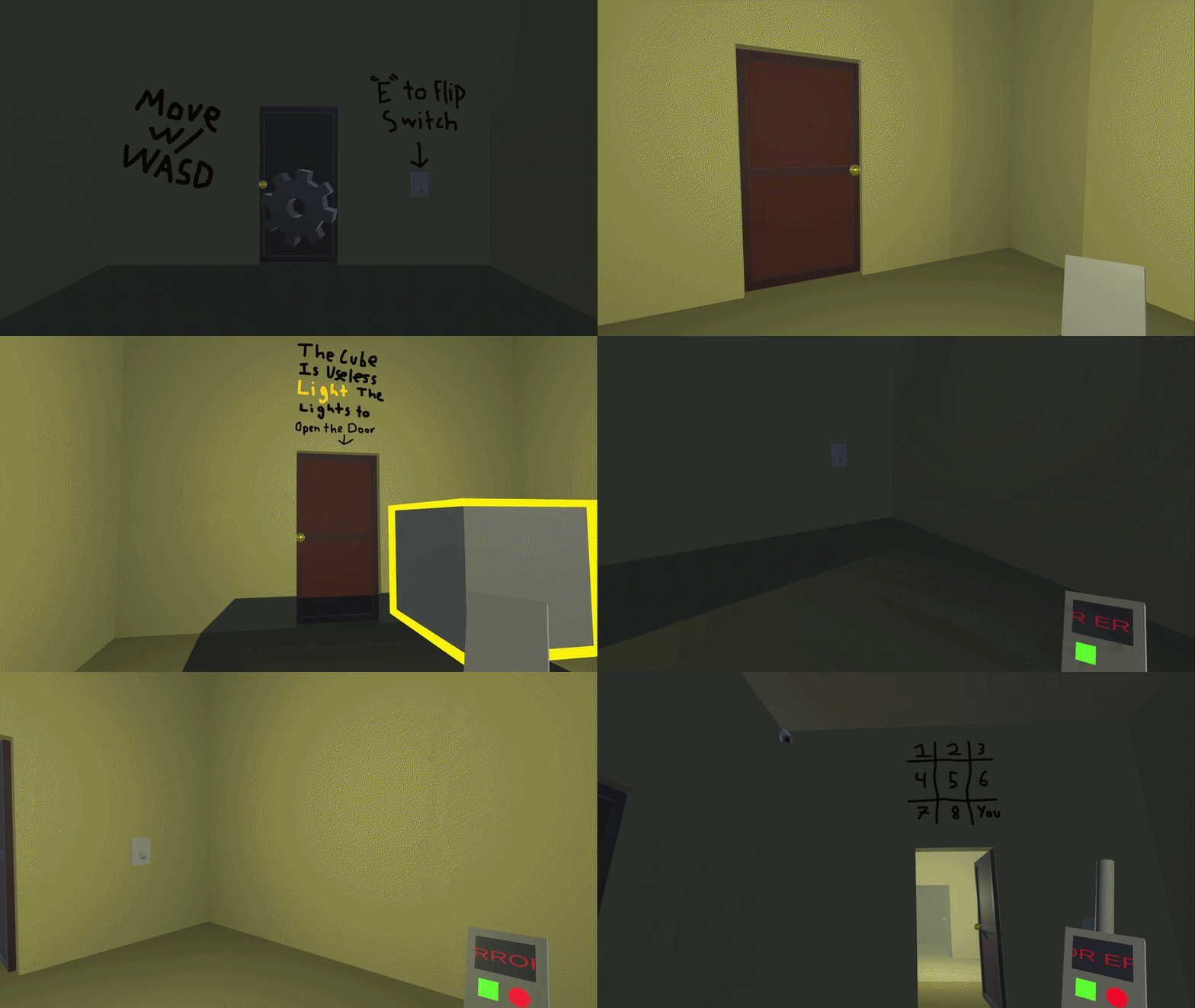
Players and testers didn't like that there was no way to see the whole puzzle at once. Since the lack of information was an intentional design decision I didn't want to get rid of it so I opted to compromise. I put in a way to see all of the lights at once, but it had to be earned by collecting the collectables and the player couldn't look at all the lights while also flipping the light switches. Early on there was also feedback given that all the rooms were nearly identical making it hard for players to remember where they were or figure out where they are. Due to the time constraints I didn't have time to make each room distinct so I opted to make each corner unique by adding clues or hints to the walls to make them distinct and help the players more.

Corner 1
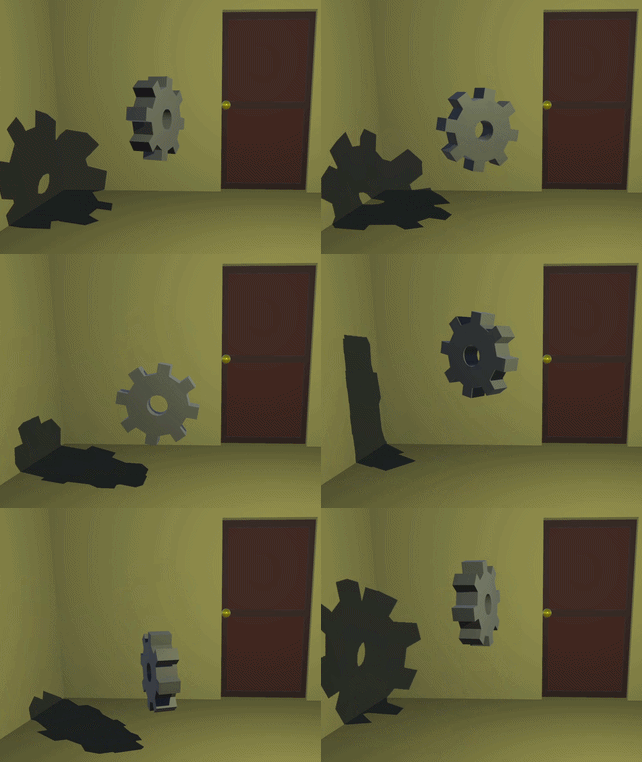
One of the collectables.
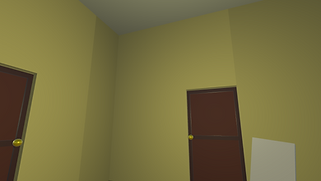
Each collectable builds a device which can be used to access another room.
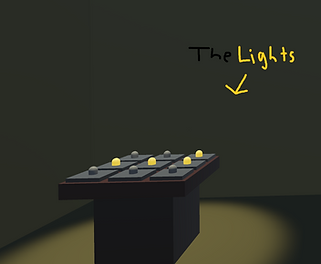
The room accessed with the device has two tables, one that shows the state of all lights in the rooms.
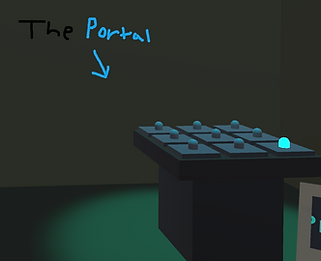
...And the other which shows which room you teleported from and will teleport back to.
Second Development Period Part 1
I wanted to work on this project again and rework it so that it could be expanded beyond it's original scope. The goal I set out to tackle was to practice ways of teaching the player to solve puzzles through level design and the pacing of difficulty. I spent the first few weeks rebuilding the project from the ground up to make the systems work better with what I wanted and to make sure I was familiar with the idea. I spent some of that time developing a better interaction system as there were some bugs with how that was handled the first time around.
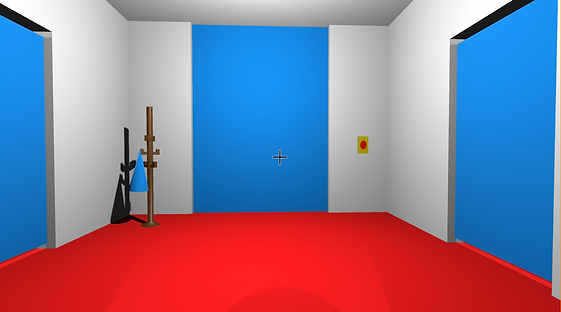
I still had the issue of rooms being unremarkable so I made some quick props using in engine tools. I also incorporated the indicator of which lights are on into the puzzle space itself in the form of the fuse box. I tried to make the level layouts more diverse by adding walls in place of doors in key places. These walls serve to restrict movement, and sometimes vision, but also serve to make rooms more defined as there are fewer rooms with identical layouts. With fewer options to move it's also harder to get turned around. Adding more interactive elements to rooms also makes them more memorable for the player.
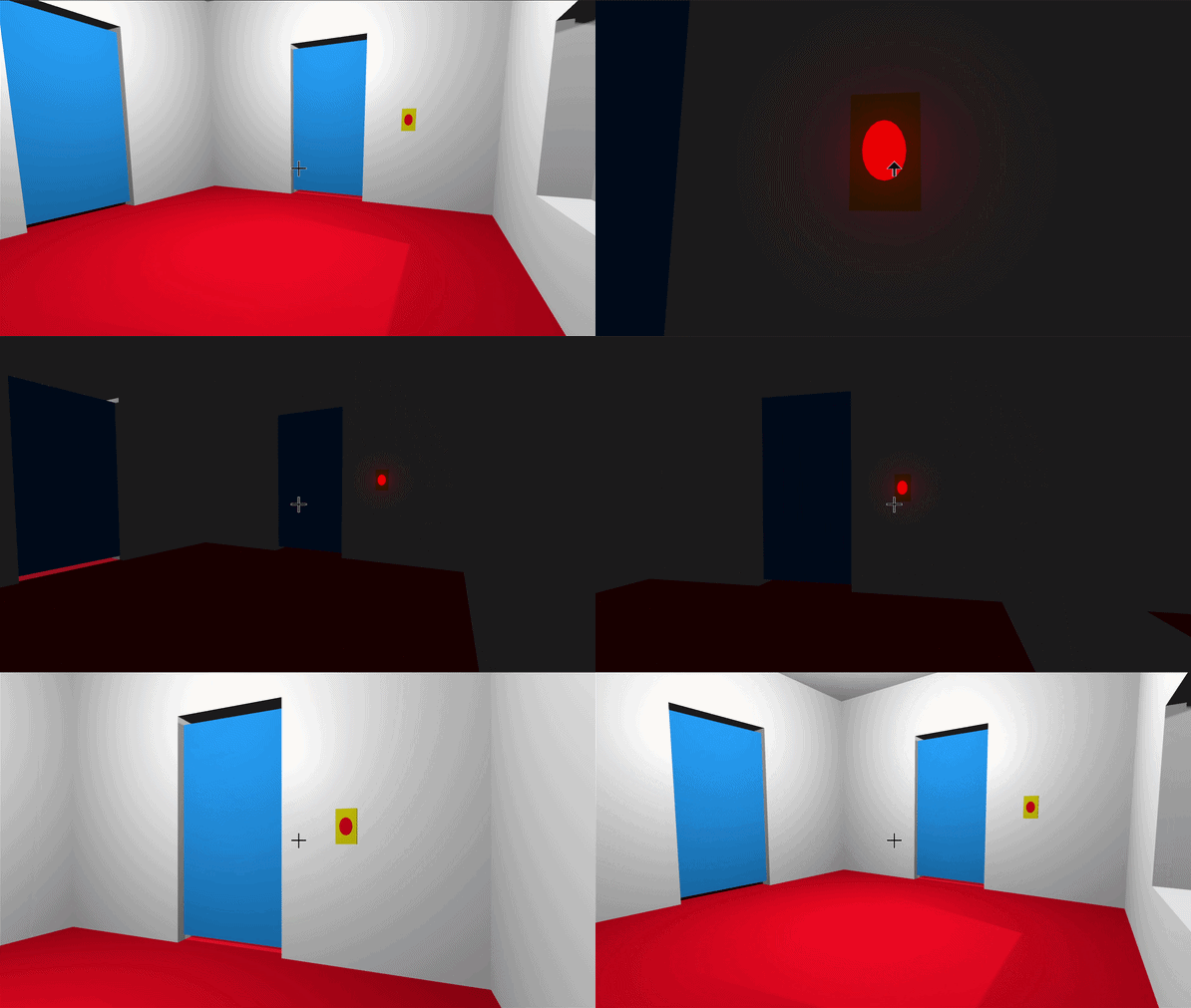
I wanted to make the rooms darker and harder to see things unless the lights were on, but in doing so the light switches became hard to see so I decided to change them into glowing buttons. This goes against the light amounts of narrative I tried to add to the game though since the game is supposed to take place in a house where you have to complete certain tasks before being allowed to leave the house. Although the spartan decor can explain that it's a facsimile of a house instead.

Level 1
This is what the level layouts look like in engine, the green boxes represent rooms with the lights off (the goal in this version of the game is to have all the lights off.)
Level 5

Level 5 is a bit different since the lights start off meaning the level should already be complete, however a new mechanic is introduced in this level, one in which the player wants to have the lights on to see.
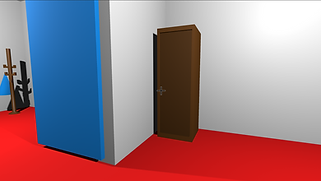
The new mechanic introduced involves the player finding their keys in one of the cabinets. Which have a little trick to them meaning the keys are always in the last place the player looks.
Second Development Period Part 2
Near the end of the second development period I had an idea I wanted to pursue and so I pivoted the project to develop a single more complex puzzle. The crux of it all was that I made all the rooms in the original puzzle design be movable using a sliding puzzle. The design idea here was that the sliding puzzle would add another layer of complexity to the puzzle while also giving the player more tools to use to solve the puzzle as a whole. It was really important to guarantee this wouldn't break the puzzle, so I did research into both types of puzzles and figured out that a 3x3 light puzzle like I've originally made are solvable from any configuration, however 3x3 sliding puzzles are only solvable from half of all configurations. Using this knowledge I know the puzzle will always work as long as the only way to influence the sliding puzzle is using the specific interaction designed for it.
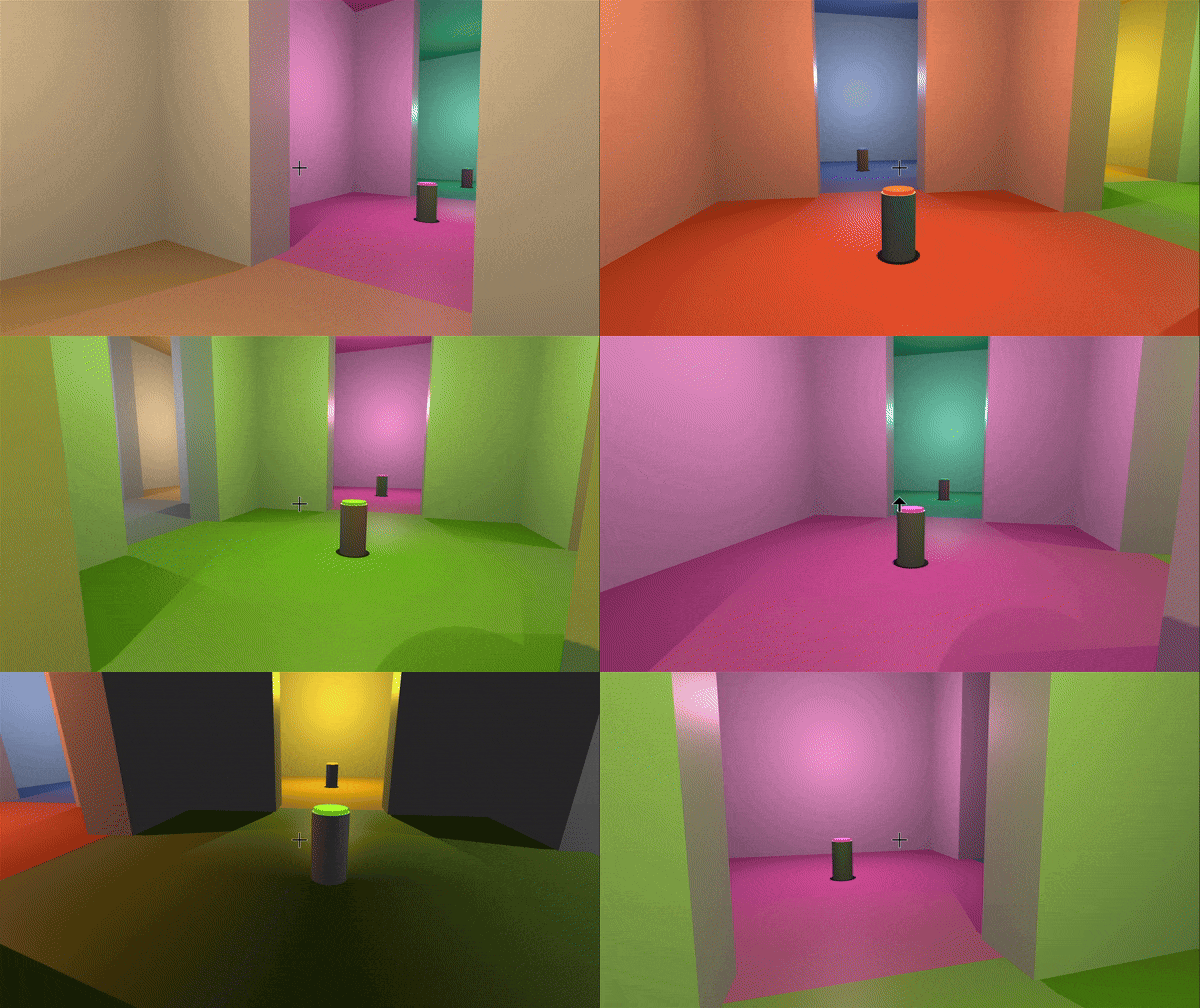
There was a new element to the unremarkable room issue, since the rooms also had to be somewhat recognizable from the sliding puzzle itself. I figured the easiest way to do it was to give each room a different color, and once I put the colored lights in as well it looked really nice so I left it at that.
Due to some difficulties with the puzzle itself I was unable to do what I originally intended which was to give the player the sliding puzzle as something they could use from inside the rooms. Instead I had to move it to it's own separate room which meant bringing back the teleporter from way back in the first development period.
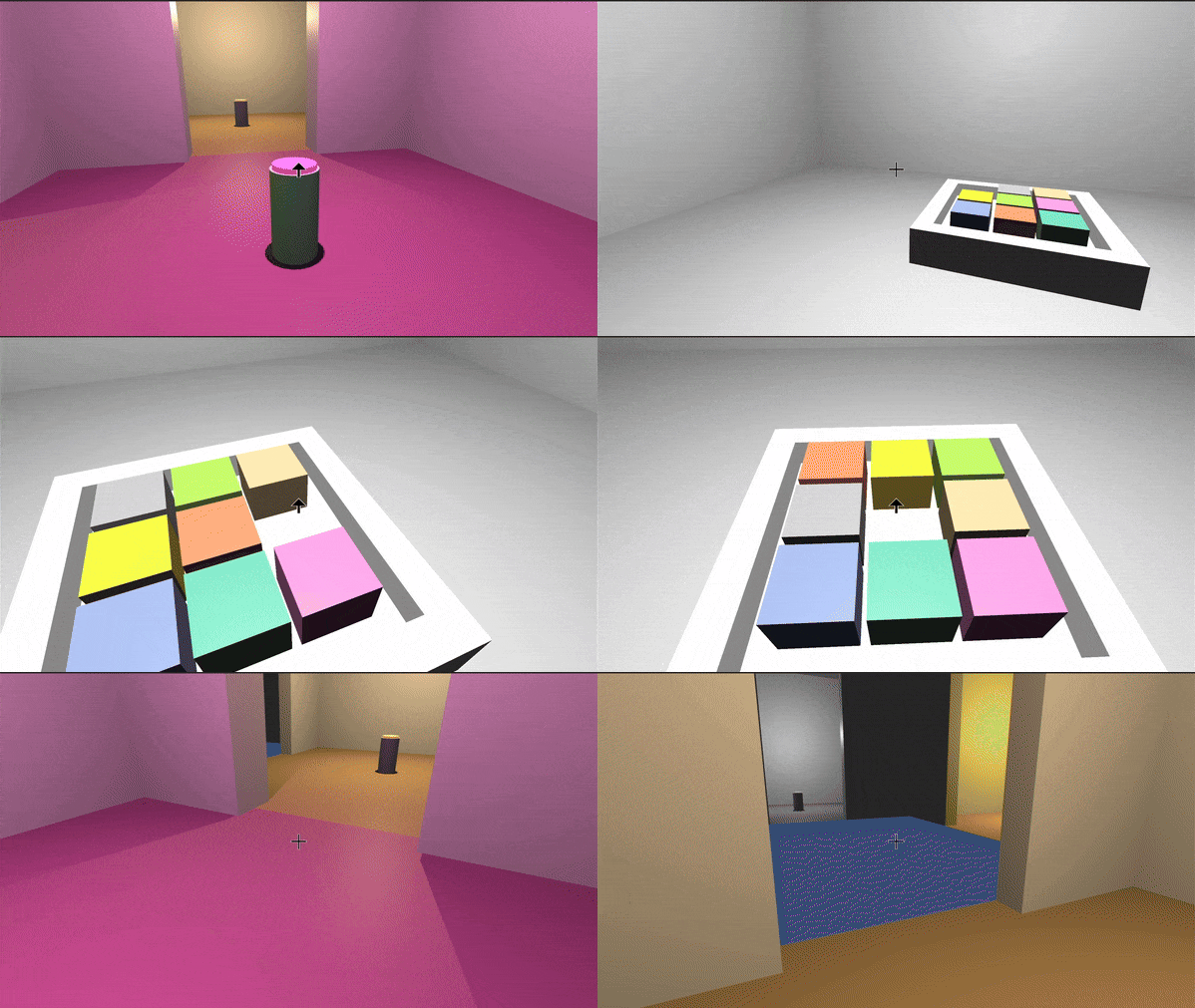
That blast of green, yellow, and blue is the teleporter. It serves two purposes, the first being that it serves as a visual indicator to explain how the player gets from one room to the other. The second thing that those flashy lights do is hide the fact that the player can't move or look around during it since that would break the teleportation in testing.
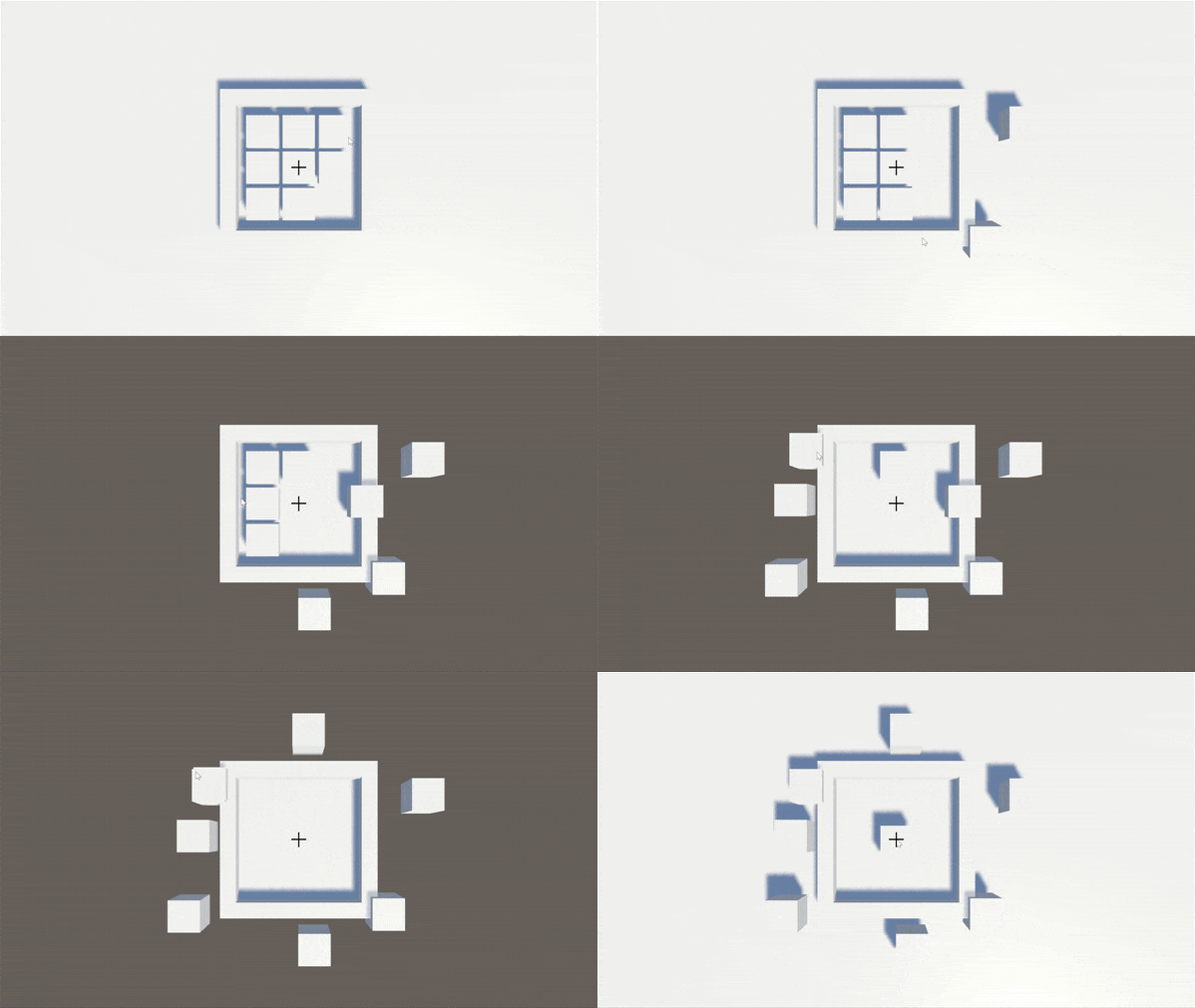
I started by getting the "floors" of the rooms to connect to the elements of the sliding puzzle.
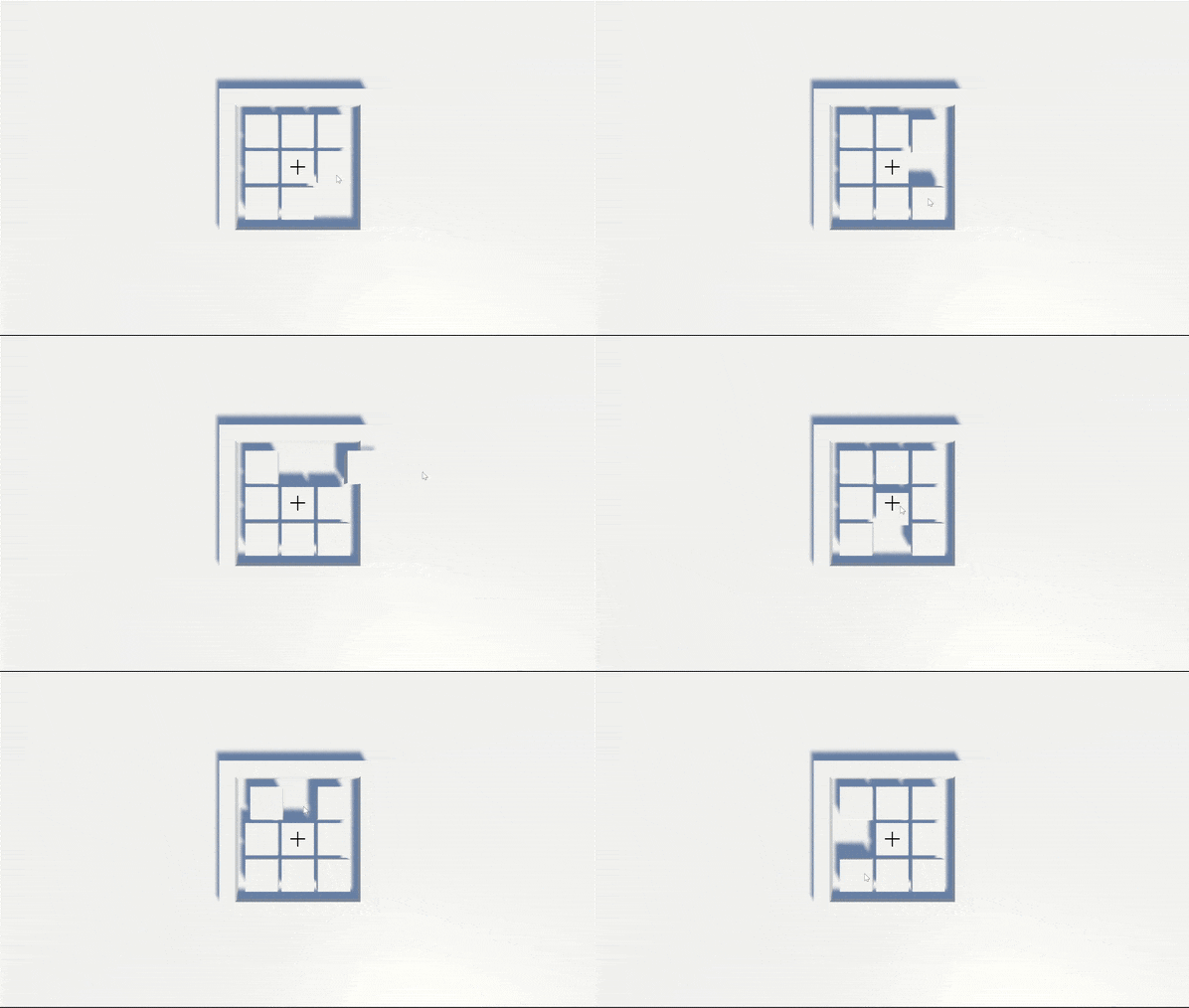
I wanted the sliding puzzle movement to be very tactile, but I didn't have time to make that feel good.
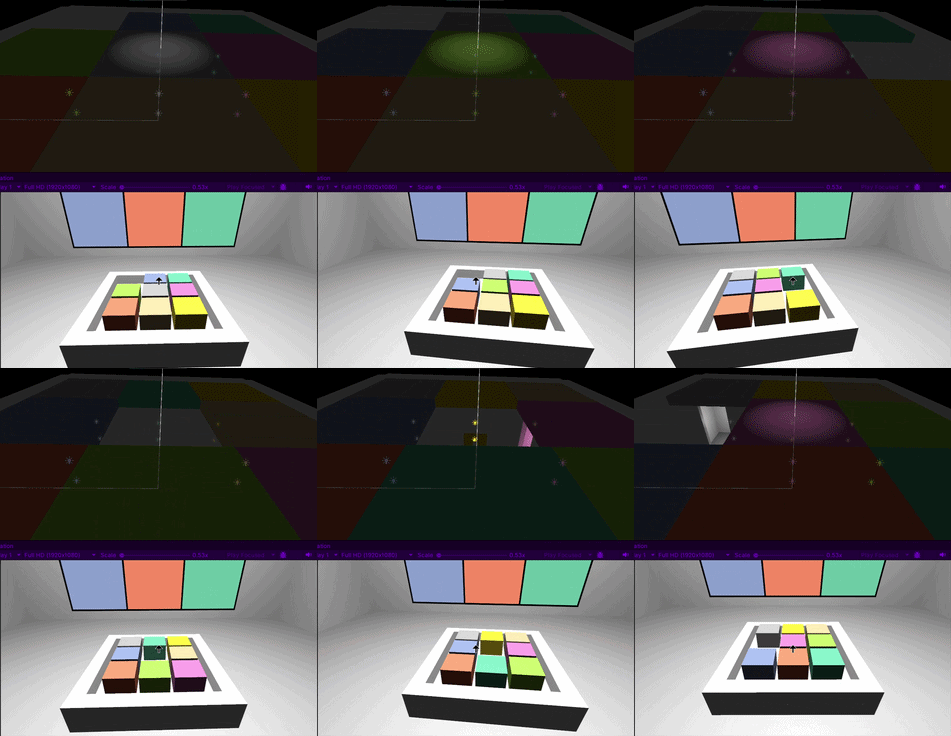
The sliding part of the sliding puzzle was pretty hard for me as a solo developer to get where I wanted it, but I'm pretty happy with the final result. I simplified it so that the pieces move to adjacent open spaces when clicked.